52. Dorset Gardens Developer: What to Look For in a Consortium-Led Project
When a condominium launch is consortium-led, the temptation is to judge the development by the marketing name alone, then move straight to stack layouts and floor-to-ceiling photos. With Dorset Gardens, that approach can leave you with blind spots. The consortium model is more than corporate housekeeping. It affects how decisions get made, how momentum is managed through planning and construction, and what you should verify before you part with serious money.
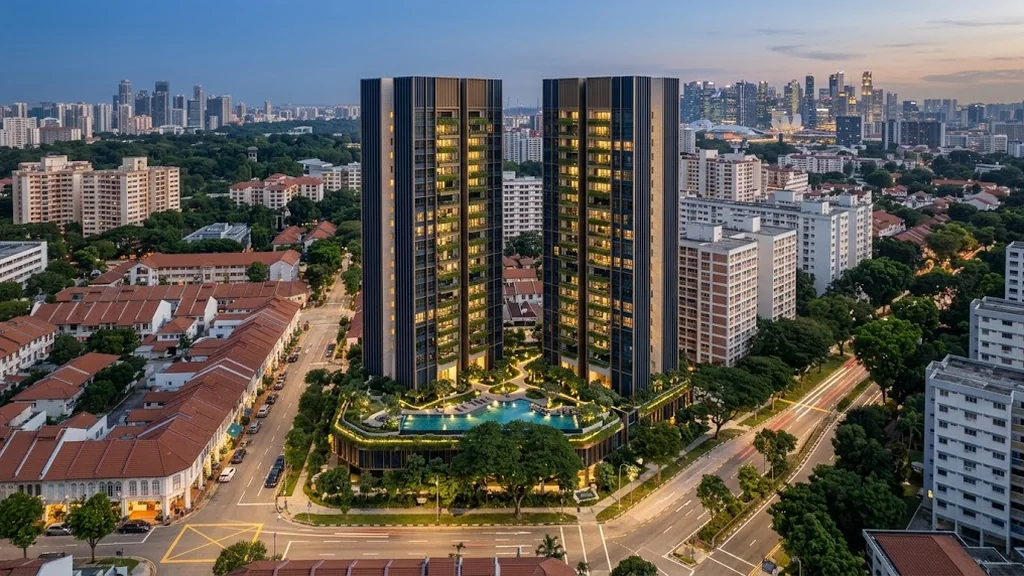
From what is publicly described about Dorset Gardens and the related Dorset Road site, the project branding points to an upcoming condominium near Farrer Park MRT in District 8. The site was won as part of a government land sale bid awarded in October 2025, and the consortium behind it includes UOL, Singapore Land Group (SingLand), and Kheng Leong Company. One published figure places the consortium’s shareholding as UOL 60%, SingLand 20%, and Kheng Leong 20%. The development is described as a 99-year leasehold condominium with about 428 homes across two 27-storey towers, and some references also describe the site’s scale and location characteristics, including proximity to Farrer Park MRT Station. There are also marketing-style pages that refer to brochure downloads, price list registration, and showflat appointment booking, but a fully confirmed, official pricing schedule was not shown in the material reviewed.
So the real question becomes: if Dorset Gardens is being delivered by a consortium, what should you look for in the Dorset Gardens developer and the project details, beyond the brochure polish?
Start with the consortium reality, not the one-company story
In a single-developer project, you can often talk to one brand, one internal team, one decision-maker. In a consortium, the “developer” you meet during marketing is still the face, but the long-term delivery depends on a larger decision structure. That structure can be stable, or it can be slow, depending on how partners align.
With Dorset Gardens, the verified consortium information is clear on membership and proportions. UOL is the largest shareholder in the described JV structure, at 60%, with SingLand and Kheng Leong at 20% each. If you are comparing how projects feel during sales, you should expect that the strongest brand and operational capability within the JV, often the majority partner, will carry more of the practical workload.
However, “majority partner” is not the same as “no influence from others.” If you are the buyer, you still want to understand who controls the pace and how the sales team’s public commitments line up with what gets approved, built, and completed.
A practical way to handle this is not to overthink corporate charts, but to pressure-test your key assumptions early. For example: does the brochure speak in definitive terms about what you are buying, or does it frame items as “subject to approvals” or “to be confirmed”? Does the showflat preview allow you to see workmanship details that matter to your everyday use, like common corridor finishes, door hardware look and feel, and the precision of plaster lines around windows and returns?
If a project is still in marketing phase, you should assume some design and documentation details can move. The consortium structure does not change that reality, but it can influence how quickly final answers are given once you ask.
Confirm the fundamentals tied to the Dorset Gardens location
Before you get emotionally attached to a floor plan, anchor yourself in the site context. Dorset Gardens is tied to the Dorset Road government land sale site in District 8, near Farrer Park MRT. That locational anchor matters because it shapes how you should evaluate your daily living trade-offs.
In an area like District 8, buyers often care about a few things that are easy to overlook when you are only scanning unit sizes:
- Access and commute timing, especially if you rely on MRT as a default route.
- How noise and traffic rhythms might affect the “feel” of certain levels, even in a high-rise.
- School catchment sensitivity and nearby everyday amenities.
You do not need to invent specifics to do a smart check. Use what’s already stated publicly about the location and confirm it yourself through your own route planning and time-of-day checks. If you are going to view showflat units, treat it as an opportunity to “mentally simulate” your routine, not just admire a model kitchen.
If you plan to contact the marketing team for Dorset Gardens brochure or a Dorset Gardens book appointment, ask questions that link the location to what you will actually experience from your preferred unit levels. For instance, ask whether any confirmed site details affect orientation or view planes, and whether the project description implies particular constraints around the site. Even if they cannot give a final answer, their responsiveness will tell you how prepared they are.
Treat the planned build profile as a major decision input
One of the clearest verified points you can use for Dorset Gardens project details is the planned built form description: a 99-year leasehold condominium with about 428 homes across two 27-storey towers. That combination tells you a lot about scale and unit mix even if you have not seen the full price list.
Two towers usually means more shared common areas and circulation choices for residents. Two towers also often means that view corridors and adjacency to surrounding structures become a bigger deal. Buyers sometimes assume “high floor equals best,” but with two towers, the best units can be more about aspect, privacy, and how buildings relate to each other.
The fact that the development is 99-year leasehold also changes how some buyers evaluate long-term holding. Lease length can affect resale perception and loan tenability, depending on timing and market sentiment. You do not need to panic about it, but you should align your buying horizon with the lease profile.
Finally, the overall home count of about 428 units signals a certain density. Even if you love the unit itself, density affects how you might experience lifts during peak hours and how crowded certain facilities could feel. Your job as a buyer is to ask for enough information to see past the showflat staging.
Look at the consortium developer through one test: coherence
A consortium-led project should still deliver a coherent story. If the “Dorset Gardens developer” is presenting a unified direction, the public material should line up across different pages and sessions. If you notice mismatches, that’s a signal to slow down.
Here’s the coherence test, applied to what you can realistically verify during marketing.
What to check during brochure and appointment stages
When marketing pages mention a Dorset Gardens brochure, brochure downloads, price list registration, or Dorset Gardens view showflat booking, you should treat those as operational milestones. Your goal is to connect those milestones to contractual clarity.
Use this short checklist when you get your first set of materials, then again when you attend the showflat session:
- Ask what has been officially confirmed for the project, and what remains subject to approval or final submission.
- Verify the stated lease profile and the planned twin-tower description (two 27-storey towers, around 428 homes) match what you receive in your documents.
- Request the latest project details you can, then compare them against the marketing claims you saw before the visit.
- Clarify how “direct developer price” or “price list registration” works in practice, including whether prices are indicative or final for the units you are shown.
- Check who the sales representatives represent, and whether they can answer questions about the project delivery timelines in a consistent way across sessions.
This is not busywork. In consortium-led setups, clarity about what is fixed and what is still moving can be the difference between a confident decision and a regrettable one.
Know what the land sale and bid data can and cannot tell you
The Dorset Road site’s land sale background provides a useful credibility anchor. One published figure states the bid was awarded in October 2025 for S$524.3 million, or S$1,338 per square foot per plot ratio (psf ppr). The same verified context also states the site is won by a consortium of UOL, SingLand, and Kheng Leong Company.
It is tempting to treat those numbers as a valuation shortcut or to assume they guarantee a certain level of pricing power. Be careful. Land bid amounts are inputs, but they do not directly set your exact unit price. Construction costs, design changes, financing, and market timing all matter.
Still, those bid facts tell you the consortium committed to the site at a meaningful valuation. That is relevant because serious capital commitments often align with serious delivery intent.
If you are assessing Dorset Gardens pricing expectations, keep the land data as background context, not as a price promise. The more reliable pricing insight comes from the price list you can register for and the actual unit configurations being offered during the launch preview or sales. In the reviewed material, there was mention of “price list” registration and “direct developer price” language, but no reliable final confirmed pricing schedule was presented. So the best you can do is prepare to evaluate prices when the project offers them in the same structured way to all buyers.
Focus on developer credibility where it matters: delivery and accountability
When people say “developer credibility,” they often mean awards, brand reputation, or how pretty the showflat looks. Those are surface-level. For a buyer, credibility means accountability and execution.
For Dorset Gardens, the consortium includes a major established operator (UOL) plus SingLand and Kheng Leong. With UOL in the majority share described at 60%, you can reasonably expect UOL to play a significant operational role. But that does not remove the need to verify project delivery accountability.
You can ask pointed questions without sounding suspicious. For example, ask how the consortium will handle changes if certain elements are not finalized by the time you sign. Ask what documents you will receive and when, especially for unit-related promises that affect future renovation planning.
Even if marketing cannot provide every engineering detail, you can still judge whether the team can explain what will happen next with a straight answer. A credible team does not evade basic questions about what is confirmed and what is pending.
Separate brand marketing from confirmed project details
Dorset Gardens is branded as a “new launch” in the marketing sense, but the verified context also includes a separate project page that uses the name “Dorset Residences” and describes the planned form as a 99-year leasehold condominium with the twin-tower structure and around 428 homes. That kind of overlap is common in Singapore developments, where marketing pages and project pages may use different branding names at different stages.
What you should do with this information is not to assume it is a problem. It may simply mean the project has multiple naming conventions during rollout. Instead, treat it as a reason to verify that the documents you sign and the project details you receive refer to the same development, same site, and same planned built form.
When you request the Dorset Gardens brochure or book a Dorset Gardens view showflat, ask the team to confirm the project’s name used in official materials and the site description they rely on. If you notice inconsistency, pause. The cost of confusion is high once you commit.
Pricing decisions: what to do when the schedule is not fully confirmed
The reviewed material suggests there are mechanisms like brochure downloads, price list registration, and showflat appointment booking, often used to manage demand and provide buyers with unit offers. The key issue is that final pricing details were not reliably shown in the reviewed context.
So how do you make a responsible decision without pretending you know the exact Dorset Gardens pricing?
You can still act intelligently in three ways.
First, decide your budget range and the maximum unit price you can accept based on your affordability, not based on hope. If the price list later surprises you upward, you need a pre-set “no” number to protect yourself.
Second, evaluate the unit you are shown in the showflat against how it will live. Even without final confirmed pricing in hand during your early appointment, the unit attributes you can assess physically matter. Orientation, workable kitchen layout, corridor feel, and window positioning are not marketing fluff.
Third, ask how prices relate to views and levels, then compare it to what you know about the planned two-tower structure. If the team offers you explanations about what affects unit premium, listen for consistency with the project’s physical constraints.
This is where consortium-led projects can behave differently. If a JV has multiple partners, sometimes the internal alignment affects how consistently a sales team can explain pricing mechanics. It does not mean they cannot deliver, but it can mean you should insist on clear rationale rather than vague “market reasons.”
What “Dorset Gardens project details” should include, beyond the glossy parts
A strong buyer process does not stop at the brochure. You want Dorset Gardens project details that allow you to plan realistically, especially if you intend to move in and renovate or maintain a long-term living setup.
Even without inventing specific fixtures or amenities, you can ask for meaningful documentation during the showflat or appointment stage. Focus on items tied to your daily life and your future planning:
- The unit configuration basics, including what is structural versus what is finish-based.
- The implications of being a 99-year leasehold condominium, especially for your holding timeline.
- The confirmed information about the towers, the general scale (around 428 homes), and what that suggests about shared spaces.
- Any clarity you can get about official documentation naming consistency, since Dorset Gardens branding appears across marketing and project pages with close naming overlap.
You can also do a sanity check by comparing what is said across Dorset Gardens brochure materials and the showflat conversation. A difference between the written description and the sales explanation is not automatically “bad,” but it should trigger follow-up. In practice, buyers are happiest when there are no surprises after the excitement fades.
A final note on “new launch” expectations for Dorset Gardens
New launch projects often feel urgent. The messaging can compress your decision timeline, and that can lead to emotional buying. With a consortium-led project like Dorset Gardens, the right approach is calmer and more methodical.
Let the consortium information help you ask better questions, not faster ones. The described JV shareholding (UOL 60%, SingLand 20%, Kheng Leong 20%), the land bid award in October 2025 (S$524.3 million, S$1,338 psf ppr), and the planned twin-tower built form with around 428 homes and 99-year leasehold are substantial anchors. Use them to frame what you verify next: confirmed project details, consistent official naming, and transparent Dorset Gardens Floor Plan pricing through the price list process.
If you want to take action, start with the “process” steps the marketing pages already point to. Book the appointment, request the Dorset Gardens brochure, and schedule a Dorset Gardens view showflat session with a question list you are prepared to ask. When pricing and unit offers arrive through the registration workflow, you will be in a stronger position to evaluate Dorset Gardens pricing and decide without rushing.
Buying a condominium is not just about finding a pretty unit. For Dorset Gardens, the consortium-led structure makes your homework more important, because the path from marketing claims to confirmed commitments is where good decisions are separated from avoidable regret.